RSS

Just some cool stuff today

I spent about an hour crafting a thoughtful blog about the Russian Phobos-Grunt mission...only to receive the rotten news that some of the engines failed and they have three days to fix the problem (two as of this posting) or it will be Mars Probe-Eating Goul: 17  Russia: 0.  I'm grumpy about losing all that work, disappointed for Russia and none-too-happy with Mars.  So today, I'm posting some fun space stuff courtesy of my Facebook friend, Roger Weiss, who is a great guy to follow if you like space stuff.

This awesome picture comes from Hubble, and is of two interacting galaxies, with a possible third on the upper right (where you can see the bluish clusters.)  Read more here. 

You know how some motivational experts tell you to map out your dreams, use pictures, etc?  Well, NASA has done this.  However, I can't find a graphic that isn't interactive, but the interactive is tres cool, so check it out here:  http://www.nasa.gov/externalflash/globalexplorationroadmap/  If you are interested in something more detailed and less playful, there's a PDF of the roadmap developed with 12 other space agencies.


So the Orion is in the news this week.  This was part of the Bush program scrapped by Obama, which is now being repurposed to the Obama mission of going beyond low earth orbit.  So, the Orion needs to be moon-Mars ready.  (Though with their track record for Mars, let's not let the Russians help with this one.  Just in case.)


Here's the lastest test drop, to make sure that after traversing the farther reaches of space, it can actually land in water.


Here's a video of the imagined flight path for 2014. 


Enjoy the fun!  I'll write about the Russian Phobos-Grunt mission when we know better if it's a success of Russian technology and the ability to adapt or yet another episode in the Mars Hates Russian Science saga.

  • Digg
  • Del.icio.us
  • StumbleUpon
  • Reddit
  • RSS

Infinite Space, Infinite God II Wins an award!

Hope you don't mind, but I'm pretty excited about this:

Just got the cool news from Jan Verhoeff that Infinite Space, Infinite God II made the ACE Best Seller of the Month! Their award is based on reader reaction to the nominations, so I'm tickled since I didn't even know about it.

For those who don't know about the book, it's an anthology of 12 science fiction stories with Catholic characters or themes.  However, it's about exploring how faith helps someone become a hero rather than pushing the doctrine.  It's gotten a lot of terrific reviews from Catholics and non-Catholics, and is a great book for folks who like clean science fiction with a unique angle.

Why am I telling you about this on my commercial space blog?  The ISIG anthologies started because Rob and I had written some stories about the near-future of human space exploration.  If you check out the Rescue Sisters Universe page, you'll see the whole story about how we created a religious order dedicated to space search and rescue. One of those stories is in this anthology.


Learn more at http://isigsf.com  and order from Amazon.

Congratulations to all the contributors, and a big thanks to the readers of ACE Writers!

  • Digg
  • Del.icio.us
  • StumbleUpon
  • Reddit
  • RSS

Slow downs for Orbital's Taurus 2 and Cygnus Debuts

Well, it looks like Orbital is going to have to push off their planned launches of the Taurus 2 rocket carrying their Cygnus capsule until late February or early March.  The problem, they say, is not with the rocket or capsule, but the fact that the new launch facilities are not ready.  Here's the full article from Space news.

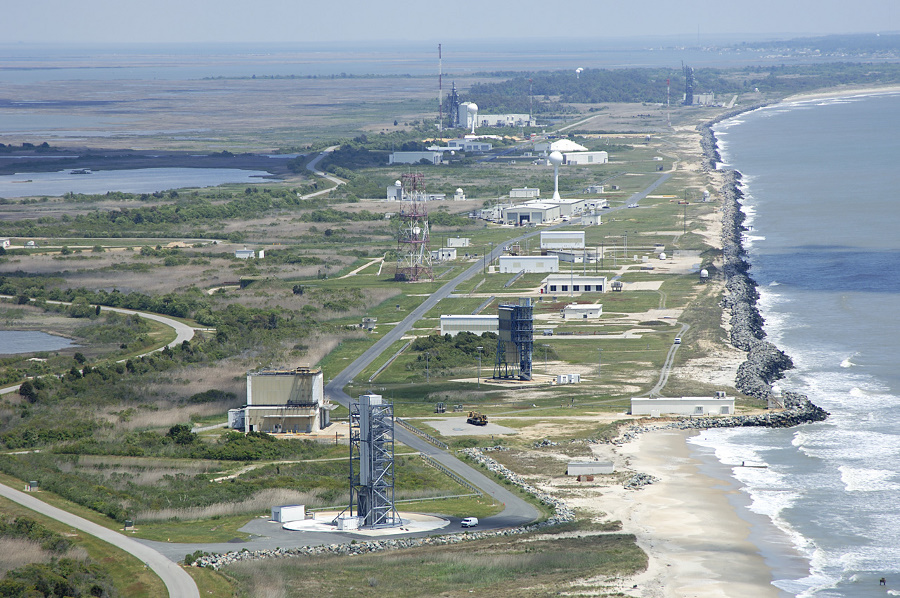
Wallops Island, photo courtesy of NASA

Wallops Island has been a launch base for NASA since 1959.  NASA tested the Mercury space capsules from Wallops Island before taking them to Cape Canaveral and putting astronauts in them.  However, it's mission has been suborbital and small spacecraft missions.  In 1998, the Virginia Commercial Space Flight Authority created the Mid-Atlantic Regional Spaceport in order to support commercial space flights with two medium-to-heavy lift launch pads.  In order to support Taurus 2, some improvements needed to be made.  The Virginia Commercial Space Flight Authority was doing those, and (as seems to happen with everything involving a government or construction operation) they ran behind schedule.  Apparently, the big problems were some rework on the launch mount and the cleaning of propellant and pressurization tanks that were not properly maintained throughout the year.  The work was to have been done by October 24, but it looks like final certification and handoff to Orbital will be in January instead.
Orbital's launch site on Wallops Island, from the Orbital website


Support structures are very important for the space industry, and they have to have the same level of perfection that the rockets and capsules do.  Unlike planes that in a pinch can take off and land on any reasonable surface, rockets need a lot more support in order to not only launch safely, but to also meet their objective in orbit.  So it's frustrating to again see delays, but with so many cogs in the machine, you have to expect some.  Orbital is already doing work on the Taurus to prepare for the eventual launch, so they aren't in a holding pattern.  They also have a lot of other missions to accomplish, and are getting more contracts for launching satellites for national military and commercial interests and international telecommunications.

  • Digg
  • Del.icio.us
  • StumbleUpon
  • Reddit
  • RSS

Industry Profile: Orbital Sciences Corporation, 2


Got to love YouTube videos.  Here's the company hype video on Orbital Sciences Corporation, also known as Orbital.

here's another fun one from the employees POV--obviously a recruiting video, but it does sound like a fun place to work--and possibly a frustrating one if you aren't into getting tossed into the water and told to swim.  (They give their employees a LOT of individual responsibility, it seems.)  Of course, they are a small company, so they can pick the best and give them more freedom to run. 


Something I didn't realize is that Orbital is subcontracting the manufacture of the Cygnus cargo module they are developing to supply the International Space Station.  (Remember, they have an agreement to run 8 missions between 2012 and 2016.  Thales Alenia Space does a lot of module work for the ISS--their banner says they created 50 percent of the habitable volume of the ISS.  That's actually very in keeping with the Orbital philosophy, I think.  They take existing technologies and adapt them to new purposes.  Check out Thales Alenia Space here.

Unless anyone has questions, that's it for the profile of Orbital. They have a very different approach from SpaceX, but I think they will be as successful.  I certainly think it's advantageous for the US to have more than one means to access space.

  • Digg
  • Del.icio.us
  • StumbleUpon
  • Reddit
  • RSS

Please, Mr. Cain--Don't Kill Commerical Space

NOTE:  This blog is about SPACE, not about politics, but sometimes politics affects space, as we all know.  Today, I'm venturing into politics.  Anyone who comments outside the topic of this blog, especially if it is inflammatory, will have their comment deleted.  We're all intelligent, reasoning adults here, so please don't let politics turn you into something else.


In 2010, Obama announced that he was going to scrap NASA's near-space missions and leave them to commercial interests while setting NASA's goals toward longer distance and space research.  Now, as candidates campaign, we're seeing some pushback on that policy.  Last week, Herman Cain, who is running for the Republican candidacy, said that President Obama “has cut our space program to the point that we now have to bum a ride with the Russians in order to get to outer space." I have to admit, I'm disappointed and concerned about his approach for a couple of reasons:
  • The Shuttle was way beyond its life and needed to be retired.
  • The space program was already on the decline as a result of several administrations (back to Clinton, really) when we didn't start working consistently on a replacement for the shuttle.
  • Each administration (especially if it's the opposite party from the one before) changes the goals, programs, etc., at least in part because it was the other guy's program and they can do better.
So blaming Obama is really typical political grandstanding, and while I'm not surprised, especially in a speech in Huntsville, AL, home for NASA, I'm concerned about what Cain--or any candidate--will do about government or commercial space once in office.

Now, Cain has not given any specifics on what exactly he would do to "relaunch our space program," but he did say, "It's not just about getting to the moon and outer space. The space program inspires other technological advances to business and the economy. In the Cain presidency, it will be reversed back to where it should be."  (Huntsville Times)  Does that mean back to NASA making trucks for the ISS or back to making the US a major space power?


Granted, space is a low political priority, although I agree that it is a point of national pride, a growing industry and a vital step to our future.  However, as Cain said in his same speech, governments don't grow the economy; businesses do.  So, by extension, if we want to have a growing space industry (a manned space industry in this case), we need to get the commercial space businesses involved.  Supplying the ISS is a good start.  Just because we don't want to "bum a ride" with the Russians, doesn't mean we need to turn NASA into a taxi service again.

Loved ya, Shuttle, but it's time to move on.

I'll be watching with interest to see what other potential candidates say about the space issue.  If you see an article, please send it my way!

  • Digg
  • Del.icio.us
  • StumbleUpon
  • Reddit
  • RSS

Industry Profile: Orbital Sciences Corporation

Time to give a different company some space on the blog. (Pun intended, of course.)

Unlike SpaceX, Orbital (also known as Orbital Sciences Corporation) has been around for a long time, and has done some pretty innovative stuff.  Space geeks of my generation will remember how cool the Pegasus launch system was--the rocket actually launches from an airplane.

Now they've accomplished 40 or more missions.  Pegasus is taken up to around 40,000 feet on the Stargazer aircraft, then dropped. Five seconds later, the rockets fire and it continues into orbit.  By using plane power, it cuts cost of breaking the biggest pull of gravity.  This handy little rocket can carry payloads up to 1000 pounds into orbit in about 10 minutes.  Read More on Orbital's Website.

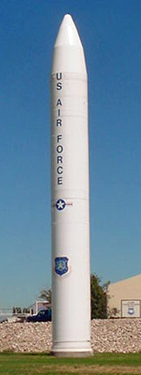
Orbital has mostly been concentrating on the small-to-medium satellites.  Thier larger missiles are a combination of Pegasus boosters and old ICBM missiles--the Minuteman II and Peacekeeper.  (See? the government CAN recycle!)
More than a memorial lawn ornament to the Cold War Era.
(Actually, they just use the engines.)
With the commercialization of manned space, they are getting into the act as well.  Their Minotaur V, a 5-stage rocket using 3 Peacekeeper missile engines and two commercial rocket engines, is cheap and uses proven technology, which is a bonus in this business where big booms are bad.  Its brochure says it's build for "to provide an extremely cost-effective capability to launch US government sponsored small spacecraft into high energy trajectories, including Geosynchronous Transfer Orbits (GTO) as well as translunar and beyond," while another rocket, the Taurus II will carry the Cygnus resupply craft to the ISS.


It looks like a big trash can, doesn't it?  Reminds me of "These Three," a Rescue Sisters story with a beaten-down ship called Le Poubelle (French for trash can.).  You can read that in ISIG I, BTW.  It's more impressive in motion...at least until it disintegrates upon reaching the atmosphere.  I'm hoping that's supposed to happen!


It's patterned after the existing multi-purpose Logistics Modules used on the space station.  (Orbital seems big on using existing technologies approved by the government.  Not a bad angle if you're looking for government contracts.)  They have a COTS contract with NASA for resupply operations between 2012 and 2015 and the Cygnus is supposed to be crew capable.  (They didn't say on their website directly, but reading between the lines, they'll use a launch abort system similar to the one they designed for the Lockheed-Martin Orion capsule.)

Orbital is a small but strong company with 3700 employees, 1800+ or which are engineers. They're located in Arizona (manufacturing), California (launch) and the DC beltway (admin.)  Their website is http://www.orbital.com.

So, what do you think?  How do they compare to SpaceX, in your opinion?  What else would you like to know about them?  Let's start a discussion!

  • Digg
  • Del.icio.us
  • StumbleUpon
  • Reddit
  • RSS

SpaceX Meets Next Milestone for Manned Space Flight

Big congrats to SpaceX for getting NASA approval on its launch abort system for the Dragon manned capsule!

The launch abort system gives the astronauts an "abandon spaceship" option should there be a problem during launch.  The Apollo capsules had one; the shuttles did not.  NASA is requiring that all manned capsules in its COTS program have such a system, and with good reason.


The nice thing about the Dragon's abort system is that it works from launch to orbit, which is better than ever done before.  Basically, the capsule itself is the escape system, so if something goes wrong with the big candle it's sitting on, they can disengage from the rocket.  However, if things go smoothly, those same engines will give them a nice soft landing on Earth or whatever celestial body they choose.

This was the next stage in their preparation to send astronauts to the International Space Station, as well as other venues, such as Mars (which is founder Elon Musk's eventual goal) or other stations.  What I've not been able to find online is a timeline for when the new system will be manufactured and put to practical tests.  So far, NASA has only approved the designs, which is an important step, but just one.  I think the goal is 2015; I'm hoping they can do it earlier than that, but there's a lot to consider, including government bureaucracy.

From Popular Mechanics, which awarded them a breakthrough award.


One thing I'm hoping, is that the different space industries are talking about standardizing airlocks.  this about what a pain and expense that will be if everyone's is just different enough that other ships won't fit.

  • Digg
  • Del.icio.us
  • StumbleUpon
  • Reddit
  • RSS