It's no secret that a lack of gravity can be as disorienting as it is fun. When the middle ear cannot tell up from down, it can make you nauseous until you're used to it. However, can microgravity affect your ability to think?
That's beenthe topic of many studies, outlined in this New Scientist article by Anil Ananthaswamy, which I found presented in whole on the Transhumantech blog. Go there to read it, because it's very interesting, but let me give you a few highlights.
Our sense of balance is tied to the vestibular system, which is part of your inner ear.
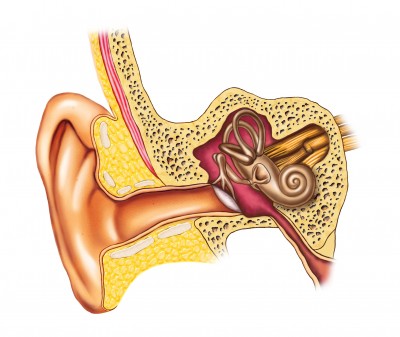
However, the nerves that lead from the vestibular system connect with a lot of the brain, including where we process images and also control of hands, arms and eyes. Studies on earth and in space have shown that messing with the inner ear can affect perceptions. For example, one study found that tilting people 135 degrees affected their ability to recognize faces. Another study, done on parabolic flights that simulate zero g, showed that people looking at a square from different angles are more likely to think it a diamond, while on earth, they would see a diamond when it's on or near its point. So in space, you'd see this as a diamond. This shows, they said, that we rely on gravity for interpreting images. By seeing how astronauts write letters (of the alphabet), they found gravity influences how we perceive things in the vertical dimension.

So, all very nifty, but what does this mean? "Space fog" is a known condition among astronauts and has been the culprit for accidents, like then the Progress capsule hit the Mir space station in 1997. This will be a particular concern when we start talking Mars missions, where humans will be years in microgravity far from home. Obviously artificial gravity would be the best solution. In the meantime, there's an "early warning" system aboard the ISS that can help astronauts know when space fog is affecting their abilities. The data it's collecting will help us learn whether the effects get worse with time or if the body adapts.
There are other interesting inventions mentioned in the article for helping overcome space fog, like when on moon-walks to keep astronauts from getting disoriented.


