RSS
Showing posts with label ISS. Show all posts

Diary of a Space Zuccini


Sounds like a literary SF novel, doesn't it?  In fact, it's an actual blog by space station astronaut Don Pettit, who returned to earth this month.  It's life on the space station as told by a zuccini plant that is growing on the station as an experiment on aeroponics to see how microgravity affects plant growth.

Zuc blogs about what's going on in his life and the life of the astronauts who are studying him.  Sometimes, things are a little silly
Great news; I have a baby brother sprout! Gardener just showed me baby Zuc. He is strong and healthy and ready to move from the sprouter into his own aeroponic bag. While Broccoli and Sunflower are great companions, there is nothing quite like having a zucchini to zucchini conversation.
 Other times, however, zuc talks about the experiments going on in the station, both on himself and in other fields.
Sunflower has brown patch.  His leaves are covered with dry, dark blotches.  He is not happy.  Gardener says it looks like a fungus.  I am afraid that if something is not done we are going to lose Sunflower.  The crew medical kit is designed for animals not plants so there are no medications for this disease.  Gardener is treating Sunflower with a disinfectant wipe that has an antibacterial agent called BZK (Benzalkonium chloride).  We do not know if this is going to work.  Our spacecraft is designed for animals so life can be a struggle for plants.  On the frontier, the answers are not found in the back of the book and sometimes you have to venture into the unknown and improvise.
 Sometimes, Zuc talks about current events.  he's a bit of a Renaissance plant, as you'll see:


We released Dragon today. The treasures he brought were traded for some of our goods and then he went on his way. I like this concept; Dragon brings us things we can use in exchange for things we have made on orbit. The things we make on orbit are samples from our scientific experiments. They have great value to the Big Gardener on Earth. Explorers use to bring back silk and spices. Now we bring back scientific samples, crystals, blood, and urine. Within these goods lay spoils more valuable that plundered gold for they are the key to advancing our knowledge. Sometimes we give Dragon broken spacecraft parts that he will repair and bring back on his next visit. Before we closed the hatch, we placed a picture of our crew on the bulkhead. Dragon seemed anxious to go. I guess when a Dragon visits, they do not stay long.
Sometimes, the astronauts add to the blog as well, so you get human and plant perspective.  It's a fun way to keep up on activities in the ISS.  I recommend it for some light but interesting reading.

I happened across this doing research for another blog, and I'm glad I did.


  • Digg
  • Del.icio.us
  • StumbleUpon
  • Reddit
  • RSS

ISS Crew stuck again?

Well, the launch to send the next crew to the International Space Station was to have happened on March 29, but the Soyuz capsule was damaged in a "botched pressure test" and it looks like the current crew will be up there until May 15 or so.  First a rocket, then the Mars probe, now the Soyuz.  They are not doing well lately.

On the bright side, the Dragon is to have its maiden voyage on April 30th.  This is the first time a commercial spacecraft will dock with the ISS, and the best things are it's new, it's been heavily QC'd, it's it's made in America.  I'm looking forward to this flight and what it will mean for America and space.

Credit SpaceX Jan 2012.

  • Digg
  • Del.icio.us
  • StumbleUpon
  • Reddit
  • RSS

And Now for Something Completely Disorienting

It's no secret that a lack of gravity can be as disorienting as it is fun.  When the middle ear cannot tell up from down, it can make you nauseous until you're used to it.  However, can microgravity affect your ability to think?

That's beenthe topic of many studies, outlined in this New Scientist article by Anil Ananthaswamy, which I found presented in whole on the Transhumantech blog.  Go there to read it, because it's very interesting, but let me give you a few highlights.

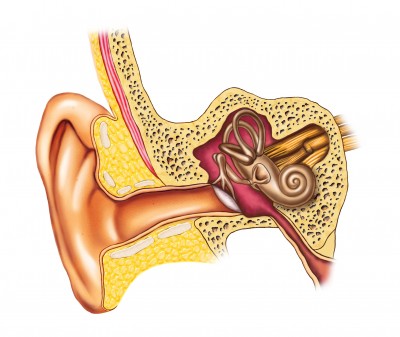
Our sense of balance is tied to the vestibular system, which is part of your inner ear.

However, the nerves that lead from the vestibular system connect with a lot of the brain, including where we process images and also control of hands, arms and eyes.  Studies on earth and in space have shown that messing with the inner ear can affect perceptions.  For example, one study found that tilting people 135 degrees affected their ability to recognize faces.  Another study, done on parabolic flights that simulate zero g, showed that people looking at a square from different angles are more likely to think it a diamond, while on earth, they would see a diamond when it's on or near its point.  So in space, you'd see this as a diamond.  This shows, they said, that we rely on gravity for interpreting images. By seeing how astronauts write letters (of the alphabet), they found gravity influences how we perceive things in the vertical dimension.

So, all very nifty, but what does this mean?  "Space fog" is a known condition among astronauts and has been the culprit for accidents, like then the Progress capsule hit the Mir space station in 1997.  This will be a particular concern when we start talking Mars missions, where humans will be years in microgravity far from home.  Obviously artificial gravity would be the best solution.  In the meantime, there's an "early warning" system aboard the ISS that can help astronauts know when space fog is affecting their abilities.  The data it's collecting will help us learn whether the effects get worse with time or if the body adapts.

There are other interesting inventions mentioned in the article for helping overcome space fog, like when on moon-walks to keep astronauts from getting disoriented.

  • Digg
  • Del.icio.us
  • StumbleUpon
  • Reddit
  • RSS