


The Dragon's Going to ISS Feb 7!
Hooray! SpaceX has a launch date for the Dragon Feb 7! The NASA Press release is here, but here are the highlights:
* The Dragon will first do a fly-by at about 2 miles away from the station in order to check its sensors and other systems needed for a safe docking.
* When the Dragon docks, the ISS will use its robotic arm to assist. (It doesn't say why that is so. I had thought from the videos that it would dock on its own.)
* SpaceX is, of course, the first commercial craft to dock with the International Space Station, so this is history in the making.
* SpaceX has completed 36 of 40 of the milestones disctated to it under the COTS agreement, for which it will receive a total of 288 million dollars. (To compare, the space shuttle Endeavor cost 1.7 billion dollars.)

Of course, the next step for the Dragon and SpaceX is to finish the modifications that make it manned-approved. SpaceX has suggested that the Dragon is manned capable. However, there are certain modifications, like an escape system, that NASA is requiring. (Not a bad idea considering the Shuttle disasters.)
Forbes Magazine says that in light of the problems that the Russians have been having with their program lately, getting commercial flights going. Considering the latest report on how they were working on Phobos-Grunt, including soldering it while full of highly explosive rocket fuel, I'm even more glad to see us making progress toward domestic services. I had been seeing reports that the Dragon's maiden flight might get pushed off as far as April. I wonder, did the Phobos-Grunt failure (and subsequent revelations) perhaps nudge someone in the bureaucracy to accelerate the schedule?
According to NASA, SpaceX has really put their nose to the grindstone to fix problems NASA pointed out: "SpaceX has made incredible progress over the last several months preparing Dragon for its mission to the space station," said William Gerstenmaier, NASA's associate administrator for the Human Exploration and Operations Mission Directorate. There's oddly nothing on SpaceX's website about this yet. I wonder if their web guru is on vacation, or if the small company had just been putting its efforts elsewhere. Whichever, congrats to SpaceX and Happy Flynig!

Space Coolness--LIVE
Today, I present to you some fun space links to see what's happening right now:
See what the International Space Station Sees: Live link at http://www.nasa.gov/multimedia/nasatv/iss_ustream.html
 |
| Hey! I can see my house from here! |
Remember the Voyager probes? We're still discovering stuff from them! They're in the heliosheath (the outer part of the heliosphere where solar wind is slowed by pressure from interstellar gasses--about 80 times the distance from the sun that the earth is! You can exactly how far they've traveled here: http://voyager.jpl.nasa.gov/where/index.html
 |
| Can you hear me now? |
 |
| No, John Carter is not your tour guide. |
 |
| Sadly, it didn't let me design this. Sigh. |
Russia's Phobos-Grunt mission still in the air, figuratively speaking
Reader Walt Staples likes to send me articles he gets on his phone. Got to LOVE having well-read friends! Anyway, when he sent this one about Russia sending a probe to Phobos, I decided to write on it, especially since I discovered Sunday night that I actually have people in Russia reading this blog. (Also Croatia, Brazil, the Netherlands, Canada, the UK, Germany, France and Italy. So...приветствовать, dobrodošli, Welkom, Welcome, begrüßen, accueillir, and Benvenuto, and I hope those are all correct because I'm using an online translator.)
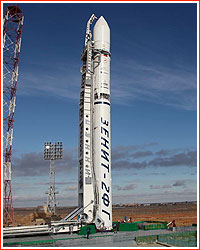 |
| Big Dreams: A Zenit rocket with Phobos-Grunt awaits its historic liftoff shortly after its rollout to the launch pad Sunday. photo from RussianSpaceWeb.com. |
Russia has had a real love-hate relationship with Mars. It seems to be mostly hate on Mars part, and frankly, the way it "eats" Russian missions, I'd have to wonder about any love on Russia's part. All of the probes Russia has sent to Mars have failed, from blowing up on the pad to mysteriously disappearing miles form the Red Planet's surface.
Here's a list of interplanetary flights from all (?) countries up to 2007, which I found on the Russian Space Web.
Then, well, the end of the Soviet Union put a bit of a kink in any deep space plans. Whent eh Societ Union fell apart politically and economically, it split the Soviet Space industry infrastructure (which, according to this 1995 analysis by James Olberg) was never all that together anyway. (Launch facilities are in Kazakistan, which was very nice when it was part of the USSR.) Financially, the nation(s) have been on thin ice for a long time. Governments had to well, FORM, then negotiate their cooperation with Russia, and much as we love deep space, I think they've had other priorities. Ironically, Russian Space Web also blames "brain drain" and a downsizing of the nation's scientific institutions.
Granted, that was 20 years ago. (The USSR fell apart in 1991.) But think of how technology has changed in that time. Perhaps this is what they meant by "brain drain"? At any rate, it has posed challenges:
"This is really a very difficult project, if not the most difficult interplanetary one to date," lead scientist Alexander Zakharov said from behind a mess of papers and a brain-sized model of pockmarked Phobos at Moscow's Space Research Institute.
"We haven't had a successful interplanetary expedition for over 15 years. In that time, the people, the technology, everything has changed. It's all new for us, in many ways we are working from scratch," he said.
Quotes from http://tvnz.co.nz/world-news/russia-back-in-space-race-mars-moon-lander-4509919. Russia back in the 'Space Race' with Mars Moon Lander.
This is a big mission for Russia, but the Mars "curse" struck again. Phobos-Grunt (Grunt means "earth, btw) launched successfully and made it into transfer orbit, but the main engines didn't fire to send it on its way to Mars.
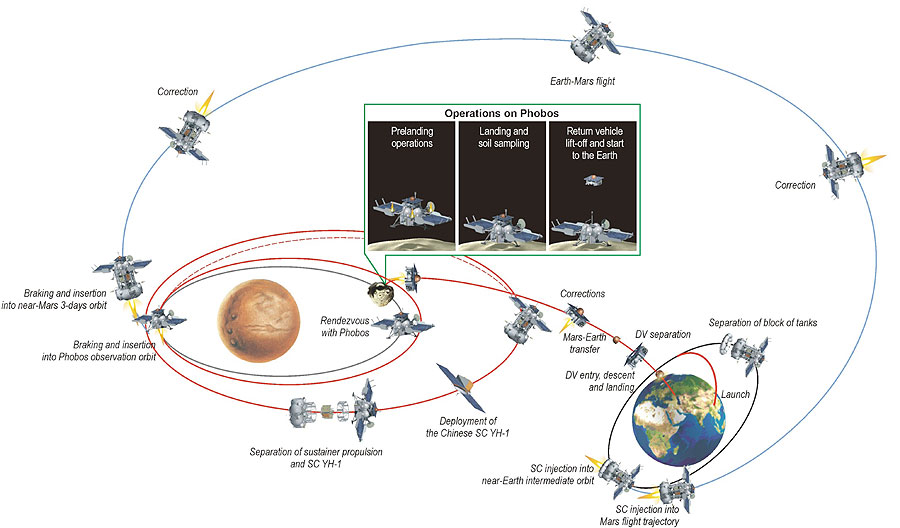 |
| from Russian Space Web's page on the Phobos-Grunt mission |
 |
| Bozhe moi! Just give me coordinates! |
"We estimate that the Phobos-Grunt will fly until January, and to make it perform its mission we still have time until the beginning of December," Ria Novosti quoted Vladimir Popovkin, head of Russia's Federal Space Agency (known as Roscosmos), as saying.
If the launch and landing go well, the Phobos-Grunt mission will do a few things:
- Carry China's first interplanetary spacecraft, the Yinghou-1 which will orbit Mars to study its atmosphere, ionosphere and magnetic field, as well as the surface of the Red Planet.
- Carry vials of bacteria suited for extreme environments to see how they react to space. This is the first years-long study of microbes in space, according to Reuters.
- Collect soil samples from Phobos to study here on Earth.
Dust from Phobos, they say, will hold clues to the genesis of the solar system's planets and help clarify Mars' enduring mysteries, including whether it is or ever was suited for life, according to the TVNZ article.Now I must admit, I'm not sure how that works. Perhaps they are looking for signs of water or something that would support organic life? But I wonder--did the dust from the moon give indications of what life on Earth would be like--or that Earth would have life at all? If not, then why would Phobos be different? A quick Google search revealed nothing to explain this thought. Any ideas?
Anyway, I'm rooting for them--and they did have one victory this week. The Soyuz craft with the next ISS crew successfully launched from Kazakistan last night. Good luck and Godspeed!
BTW, I'm asking Walt to join me in posting on this blog. I can't keep up with his e-mails!
Industry Profile: Orbital Sciences Corporation, 2

Got to love YouTube videos. Here's the company hype video on Orbital Sciences Corporation, also known as Orbital.
here's another fun one from the employees POV--obviously a recruiting video, but it does sound like a fun place to work--and possibly a frustrating one if you aren't into getting tossed into the water and told to swim. (They give their employees a LOT of individual responsibility, it seems.) Of course, they are a small company, so they can pick the best and give them more freedom to run.
Something I didn't realize is that Orbital is subcontracting the manufacture of the Cygnus cargo module they are developing to supply the International Space Station. (Remember, they have an agreement to run 8 missions between 2012 and 2016. Thales Alenia Space does a lot of module work for the ISS--their banner says they created 50 percent of the habitable volume of the ISS. That's actually very in keeping with the Orbital philosophy, I think. They take existing technologies and adapt them to new purposes. Check out Thales Alenia Space here.
Unless anyone has questions, that's it for the profile of Orbital. They have a very different approach from SpaceX, but I think they will be as successful. I certainly think it's advantageous for the US to have more than one means to access space.
Space Industry Profile: SpaceX, part 1
So, I'm a little bit of a commercial space fangirl.
One of my first posts was about the possible abandoning of the International Space Station because the Russian resupply rocket failed. In it, I suggested that they move SpaceX's schedule up and get the Dragon to send up the relief crew. Good news is that the Russians have fixed the problem and will send a relief crew up Nov 12, so it'll be "business as usual" for the ISS. "Bad news" is I might have been a little over-optimistic in my assessment of SpaceX's abilities.
So I thought I'd do a little research on SpaceX.
SpaceX was founded in 2002 by Elon Musk, who created PayPal and sold it to eBay for 1.5 billion dollars in stock. He's using his wealth to develop launch vehicles and capsules to send humans as well as supplies into space. (As opposed to just launching satellites, for example, although their rockets can do that, too.) In addition to commercial funds, they have some NASA funding through the COTS program--which is Commercial Orbital Transportation Services. Essentially NASA awarded some commercial companies money to develop technology. SpaceX got $278 million dollars. That seems a lot, but consider that the Space Shuttle cost $450/mission. The Russians charge $47 million per seat on Soyuz (according to a SpaceX press release) and that's going up to $66.3 million per seat in 2014, according to NASA. SpaceX intends to get this price to $20 million per seat.
Yeah, that's pretty ambitious, but if they even get close, wow!
So how do they plan on doing this? First, they claim to cut costs by doing the entire manufacturing in-house. In other words, they don't subcontract to other companies for their parts. They say this not only keeps cost down but also allows gives them better quality control. (Of course, one of the arguments against this is that they aren't benefiting from established companies that have decades of experience building rocket parts, and some people, such as Loren Thompson, a commentator for Forbes, believes they increase their risks for failure this way. They're also banking on being able to reuse most of their rockets, and (a big contributor!) cutting down on bureaucracy. Since they aren't a government contractor, they are already way ahead on this!
So far, SpaceX has three rockets:

Falcon 1: This is a liquid fueled rocket (using rocket-grade kerosene) and can carry 1000kg of payload into low earth orbit. The price on their website for the service is $10 million. That's actually a small payload, BTW. Get details here: http://www.spacex.com/falcon1.php

Falcon 9: This is their medium-lift spacecraft, with nine engines. It can take payloads to LEO (Low Earth Orbit) or GTO (Geosynchronous Transfer Orbit). This is the one that will service the International Space Station. It can take 10,450 kg into LEO and 4,450 kg into GTO when launched from Cape Canaveral, with an estimated price per launch of $54 to $60 million. http://www.spacex.com/falcon9.php


The Dragon: This is SpaceX's capsule which will carry supplies and people to the International Space Station (or if anybody else builds a station, orbiting hotel, or (I surmise) for tourists wanting to go up, orbit and come down). They are also designing it for carrying experiments. One thing I thought was smart in the design is that the unmanned and manned capsules are similar, so that they are easy to interchange and so that they could test manned capabilities while doing unmanned missions. (From their website: "To ensure a rapid transition from cargo to crew capability, the cargo and crew configurations of Dragon are almost identical, with the exception of the crew escape system, the life support system and onboard controls that allow the crew to take over control from the flight computer when needed.")
Events in Spaaaace!
In the news...
 |
| Sometimes a cigar...is a rocket? |
 |
| (From right) Commander Andrey Borisenko and Flight Engineers Alexander Samokutyaev and Ron Garan |
Oh, Look. NASA isn't getting out of the rocket business after all: The Obama Administration has unveiled its plans to build a huge liquid fueled rocket. http://www2.timesdispatch.com/news/2011/sep/14/nasa-unveils-giant-new-rocket-design-ar-1308453/ Now NASA says they want this to get to Mars and the asteroid belt, but I'm going to have to get some explanation on this because...
1. Didn't Obama cancel a rocket program already in development?
2. Didn't Obama say they were going to leave the space lift side to commercial interests and let NASA concentrate on developing technologies and furthering space exploration? (Note this rocket is going "back to the future" with current technology.)
3. Given NASA's track record on cost overruns and, well, the history of CANCELING programs in motion, is it really a good idea to have the government start producing a rocket that is, by nature, even more complex than the one they just scrapped because of production trouble and cost overruns? Especially when it's "scheduled" to begin TEST launches in 6 years--plenty of time for the next president to come in and slash it.
 |
| Chicks dig giant rockets...but not government programs! |
Abandon the ISS? Maybe not

When you talk to people about manned space, they usually think of two things: the space shuttle and the International Space Station (ISS). (Check out the newscast from 1981! I was a Freshman in high school. Wow. Got to love the reporter comment at 1:30: "It seems like NASA is just one giant acronym." er...)
Now the shuttle has retired after 30 years of hauling, and without a viable American replacement ready, space-lovers are nervous. (The commercial replacements are expected to be manned-ready around 2015. SpaceX with its Dragon capsule and Boeing with the CST-100 are the closest, I believe, though Sierra Nevada, and Blue Origin are also working on their own versions.) However, at least the ISS was still operating, right?
Then the Russians lost the Soyuz and the space world went into a spin. The Russians were set to keep the ISS manned and resupplied with it's Soyuz capsules, which they launch from their Progress rockets. However, the last mission--the first after the shuttle retirement--had problems. The rocket's third stage failed, and the capsule ended up in crashing in Siberia. Since then, the news has been proclaiming that we'd have to abandon the ISS.
Now, however, it looks like that's not as likely as we'd thought. The Russian space agency, Roscosmos says they found the problem--a clogged fuel line--and are checking their other rockets for the problem. They're of course also calling for tighter quality control, which should be a big duh. However, according to the commission's report (quoted in Universe Today), this defect was an accident. So, it looks like they will be able to get a new team up in time.
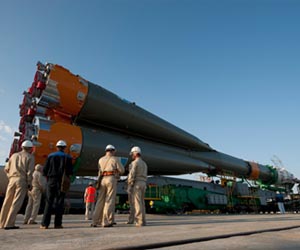 |
| Ouch! Our bad--we fix soon! |
Here's the schedule as near as I've been able to piece it together:
*There are 6 crewmen on the ISS right now. Three are to come home September 16. That's a week later than planned, and they are using one of the emergency Soyuz vehicles on the station. I believe the reason they are coming down then and not just hanging around is that the Soyuz capsules have a "shelf life" and if they wait any longer, they risk the capsule malfunctioning on return.
* The other three crewmen--an American (Mike Fossum), a Russian (Sergie Volkov) and a Japanese (Satoshi Furukawa), are planning on staying until mid-November.
* There are two scheduled Soyuz flights for October 8 and Oct 26. They might move these up to test fixes to the Progress Rocket.
So if the test flights go well, we might be able to get astronauts to the ISS in time to keep it manned.
What happens if we don't? NASA ground control is looking to see what shut down procedures they need to do to keep the station safe and ready for astronauts once the Progress rockets are ready. The crew on the ISS are making video tutorials for the systems in case they don't get to brief the next crew. (Frankly, this sounds like it should have been SOP to me, anyway.) So, it looks like we might lose some experiments that need watching, and if anything malfunctions and no one is there to fix it, we could have problems, but the station itself will be there, waiting and ready for brave men and women to call it home again.
One thing I'm not sure about and have not seen addressed is what impact this will have on the commercial space side. SpaceX is supposed to send an unmanned Dragon capsule up on Nov 30 as it's next step toward becoming a viable supporter of the station, but if no one is there to get it, I don't think they can launch. It's too bad they aren't a little closer to manned. From the utter lack of silence about them jumping in to "rescue" the station, I'm guessing that even Elon Musk doesn't feel ready to fly humans just yet. It's too bad. What a story that would have been!
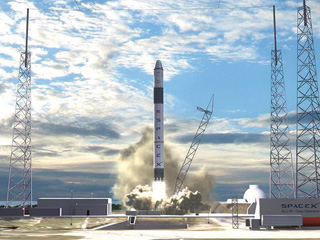 |
| Dragon to the rescue! Maybe in a couple of years... |